News
AABoard launches public evidence platform for AI literacy education standards
June 2025
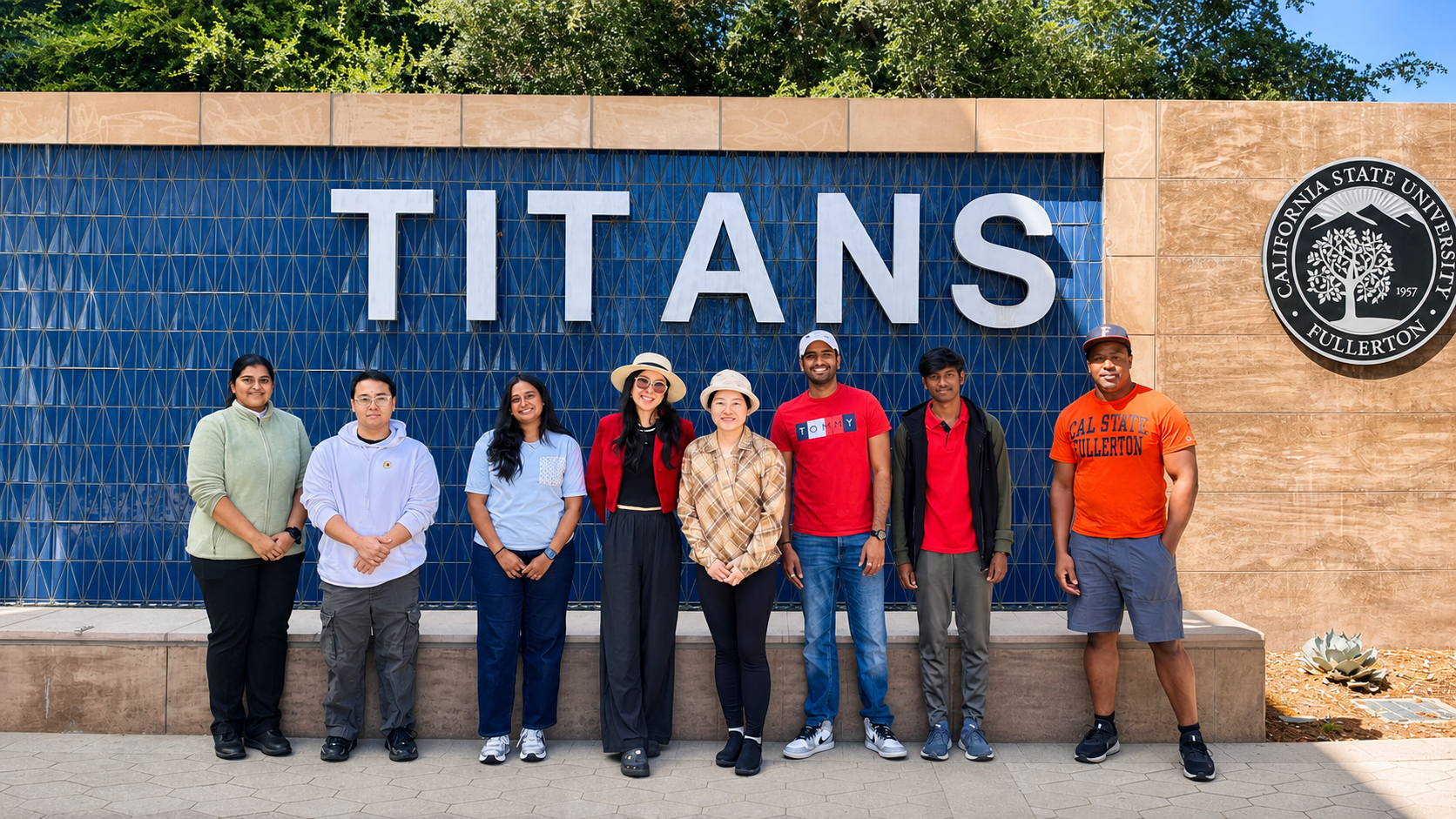
Dr. Winnie Han, Associate Professor at the Department of Computer Science, California State University, Fullerton, Dr. Lei Xu, Professor at the Department of Geography and the Environment, California State University, Fullerton, a group of student volunteers, and many collaborators have launched the International AI Assessment Board, short as AABoard, to advance AI literacy through standards and evidence.
AAB is building an open AI education case registry and pilot registry to document both published AI education research and real-world practice. The goal is to create a transparent public evidence layer for AI education: a place where researchers, educators, institutions, and the public can see what has happened and what is happening in this rapidly growing space.
That evidence layer is intended to include successes, failures, outcomes, challenges, and emerging patterns, not only polished examples. At a time when AI in education is drawing both excitement and concern, AABoard is being built around a simple premise: the field needs more transparency, better documentation, and stronger public evidence.
Why AABoard is needed
AI literacy efforts are expanding quickly across K-12 education, higher education, adult learning, workforce development, public agencies, nonprofits, and industry partnerships. The growth is promising, but the field remains fragmented. Programs often use different definitions, different assessment claims, different evidence artifacts, and different assumptions about what learners need to know.
AABoard positions AI literacy as public education infrastructure. That means standards should be transparent, evidence should be traceable, pilots should be documented, and assessment claims should be reviewable rather than simply asserted.
The public evidence platform
The website serves as the public surface for AABoard's evidence work. It brings together reviewed records, standards outputs, policy signals, public datasets, pilot frameworks, research briefs, and case examples so that AI literacy education can be discussed with more precision.
The registry is central to that approach. Instead of starting from abstract claims, AABoard organizes real-world evidence from education initiatives, resources, assessments, policies, pilots, frameworks, and cases. The goal is to make the field more comparable across contexts while preserving source trace and implementation nuance.
AABoard's work
- AI literacy education standards: developing structured language for learning outcomes, evidence expectations, safeguards, and review criteria across age groups and sectors.
- Assessment and readiness: supporting approaches that evaluate AI learning beyond tool use, including applied reasoning, responsible interaction, evidence judgment, and human oversight.
- Case and pilot evidence: documenting AI education cases and pilots so implementation claims can be reviewed, compared, and synthesized.
- Policy and research signals: tracking public policy, datasets, and research outputs that shape how AI literacy is defined in practice.
A collaborative effort
The effort has already attracted participation and interest from professors and professionals across multiple institutions, including Duke, NYU, USC, several UC and CSU campuses, ETS, The University of Toledo, Embry-Riddle Aeronautical University, South Dakota State University, and others.
AABoard is an independent, nonprofit-oriented initiative working with educators, researchers, students, volunteers, institutions, public agencies, and implementation partners. Its authority is intended to come from documented evidence, public-interest governance, transparent review, and careful standards development.
Call for participation
AABoard invites academics, educators, researchers, institutions, public agencies, volunteers, and organizations to contribute to its early-stage development.
- Contribute cases, pilots, policies, resources, assessments, or frameworks for review.
- Provide feedback on AI literacy education standards and pilot documentation.
- Join research, standards-review, policy, and evidence synthesis discussions.
A defining moment
The question is no longer whether AI belongs in education. The harder question is how AI literacy can be defined responsibly, taught accessibly, assessed fairly, and governed with evidence. AABoard is being launched to help build that foundation.
Contact: info@aaboard.org
Website: aaboard.org
Launch announcement: AABoard launch post on LinkedIn